
By Ella Hindermann, RSC Intern
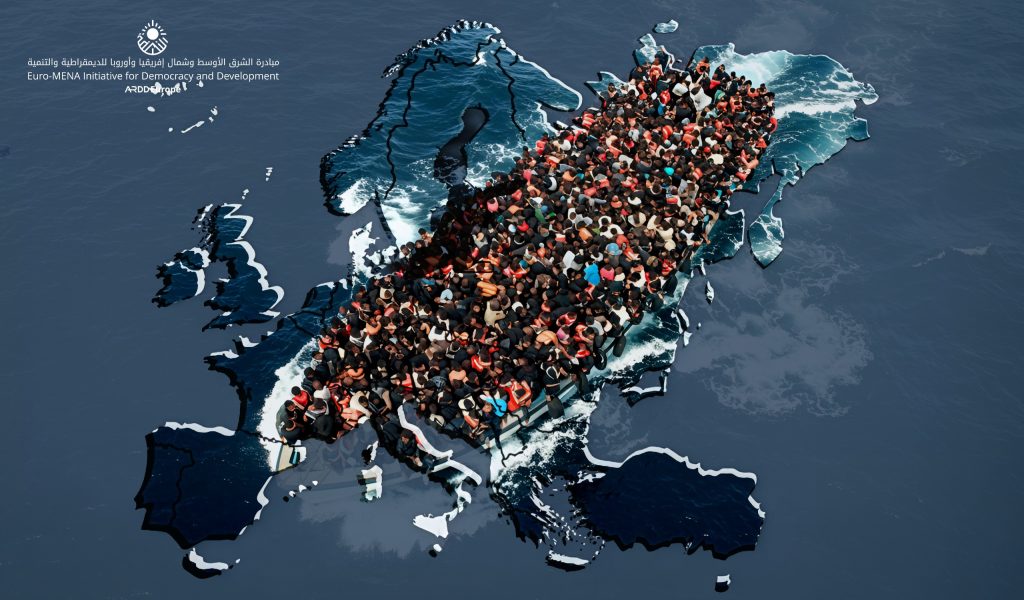
After eight years of negotiations among European states, the European Union finalized a “Common European Asylum System” (CEAS) in 2024, which all EU member states will implement by summer 2026. By replacing old asylum rules and creating unified procedures across member states, the European Union aims to limit illegal migration, prevent secondary movements within the EU, and accelerate asylum procedures. The reform, therefore, presents a major overhaul of the European asylum system, directly affecting migrant communities both inside and outside of Europe.
Legal Implications
The agreement consists of 10 EU regulations, including new migration management and intensified data collection through the EURODAC database. At the core of the reform lies a significant shift in how asylum procedures are implemented, as the new pact envisions fast-track asylum border procedures that shift asylum processes from European territory increasingly to the borders.
Upon arrival at the EU’s external borders, anyone entering without authorization must undergo mandatory screening, collecting information such as identity, health, security, and fingerprints. During this procedure, applicants may be held in border reception centers while authorities determine whether they will be directed to an asylum procedure or a return procedure. In cases where applicants are directed to a return procedure, this decision may be communicated through a “briefing form,” which is not an official decision and thus cannot be legally challenged, even if the applicant is at risk in the country where he is to be repatriated. Critics argue that this approach marks a significant departure from the principles of the Geneva Refugee Convention, which emphasizes the examination of individual protection claims. Rather, CEAS introduces the administration and management of large numbers of applicants through statistical categorization, whereby individual circumstances might not be examined sufficiently. Furthermore, legal protection during this procedure will be limited, as applicants will solely be provided with access to legal advice rather than with legal representation or support. In addition, individuals held in border reception centres during these procedures are legally considered as not having “entered” into the European Union, even though they are physically present on that territory. This controversial legal framework, often referred to as the “fiction of non-entry,” has significant implications on human rights, procedural safeguards, and the asylum seekers’ liberty during border procedures.
Where Theory Becomes Practice: The Frontline State of Greece
The legal implications of the reform are raising important questions concerning human rights and protection standards of migrant populations. In the past years, the impact of border procedures on the quality of asylum decision-making has been well documented in Greece, where these procedures have been practiced before CEAS on the Eastern Aegean Islands. The per se detention of refugees in the already existing border centers in Greece often keeps these communities far from essential services, due to their oftentimes rural and isolated location, strict surveillance, and restricted or denied access to legal support needed to navigate complex asylum procedures. Additionally, reports stated difficult living conditions in some of these centres, including insufficient medical infrastructure, limited access to food and hygiene products, and a lack of privacy. These conditions have raised concerns regarding compliance with existing CEAS obligations requiring adequate reception standards.
The implementation of the new reform may further increase the number of individuals accommodated in such facilities. The migration pact foresees the establishment of border centers across the EU’s external borders with an initial capacity of around 30,000 places for applicants undergoing border procedures, with a potential expansion up to 120,000 places in the future.
Collective Migration Management
As the Mediterranean Sea remains one of the most frequently used migration routes towards Europe, many refugees first arrive in frontline states such as Greece, Spain, or Italy. As a result, some EU member states receive significantly higher numbers of arrivals due to their geographic position, while others attract more migrants because of economic opportunities or established migrant communities. Consequently, member states face “highly asymmetrical challenges when implementing European migration law.”
Therefore, the CEAS reform introduces a mechanism intended to ensure a more balanced sharing of responsibility among EU member states. Through the system of “flexible solidarity”, states are allowed to choose their form of contribution to collective migration management. While the reform aims to facilitate a more equal distribution of responsibilities, member states may decide to make financial contributions rather than accept asylum seekers. These financial contributions, however, are not necessarily allocated directly to refugee protection, but can also be used for border management measures. Practically, this could include investments in border infrastructure, surveillance technologies, or cooperation with political actors and authorities in transit countries along major migration routes, including those operating in the Mediterranean region.
Strengthened Collaboration with Third “Safe” States
Beyond internal responsibility sharing, the CEAS reform further expands the role of cooperation with third countries in migration management. Through the reform, the criteria for states to be considered as “safe” have broadened. Under the new framework, countries are only required to provide what is called “effective protection” without having ratified the 1951 Geneva Refugee Convention in order to be considered by the EU a possible safe third state for refugees.
Furthermore, countries that maintain readmission agreements with the European Union may also be presumed to meet the necessary safety criteria. Consequently, under the revised rules, asylum applications may be declared inadmissible without examining their substance if applicants are considered able to seek protection in a country outside the European Union that has been designated as a “safe third country.” Human rights organisations, such as the German NGO ProAsyl, strongly criticize this approach, warning that such procedures might allow EU states to avoid refugee protection obligations and shift their responsibilities to external actors. In practice, the increasing extension of migration governance beyond EU territory therefore closely links migration management to partnerships with external actors along Mediterranean migration routes, particularly in North African and other neighbouring regions.
Outlook
Through its focus on fast-track border procedures, shared responsibility in migration management, and increased cooperation with third “safe” states, the CEAS reform marks a significant shift in European migration governance. While the acceleration of asylum decisions may reduce prolonged uncertainty for applicants, fundamental questions remain regarding procedural standards and access to legal safeguards within the new system.
Migration is an enduring and deeply human phenomenon, which is likely to increase in the coming years due to ongoing conflicts, the climate crisis, and unequal access to resources and opportunities worldwide. In this context, compliance with human rights, the protection of refugees, and adherence to international frameworks such as the Geneva Refugee Convention must not be neglected, as they remain essential guiding principles.
With this in mind, continued reflection on migration governance is necessary. This includes exploring approaches that expand safe and legal ways to access protection, ensure fair and accessible asylum procedures, and support reception systems that are sustainable and respond to the realities of people on the move.